DEVCOBA Final Conference: Strengthening Collective Bargaining and Job Quality in Europe’s Care Sector
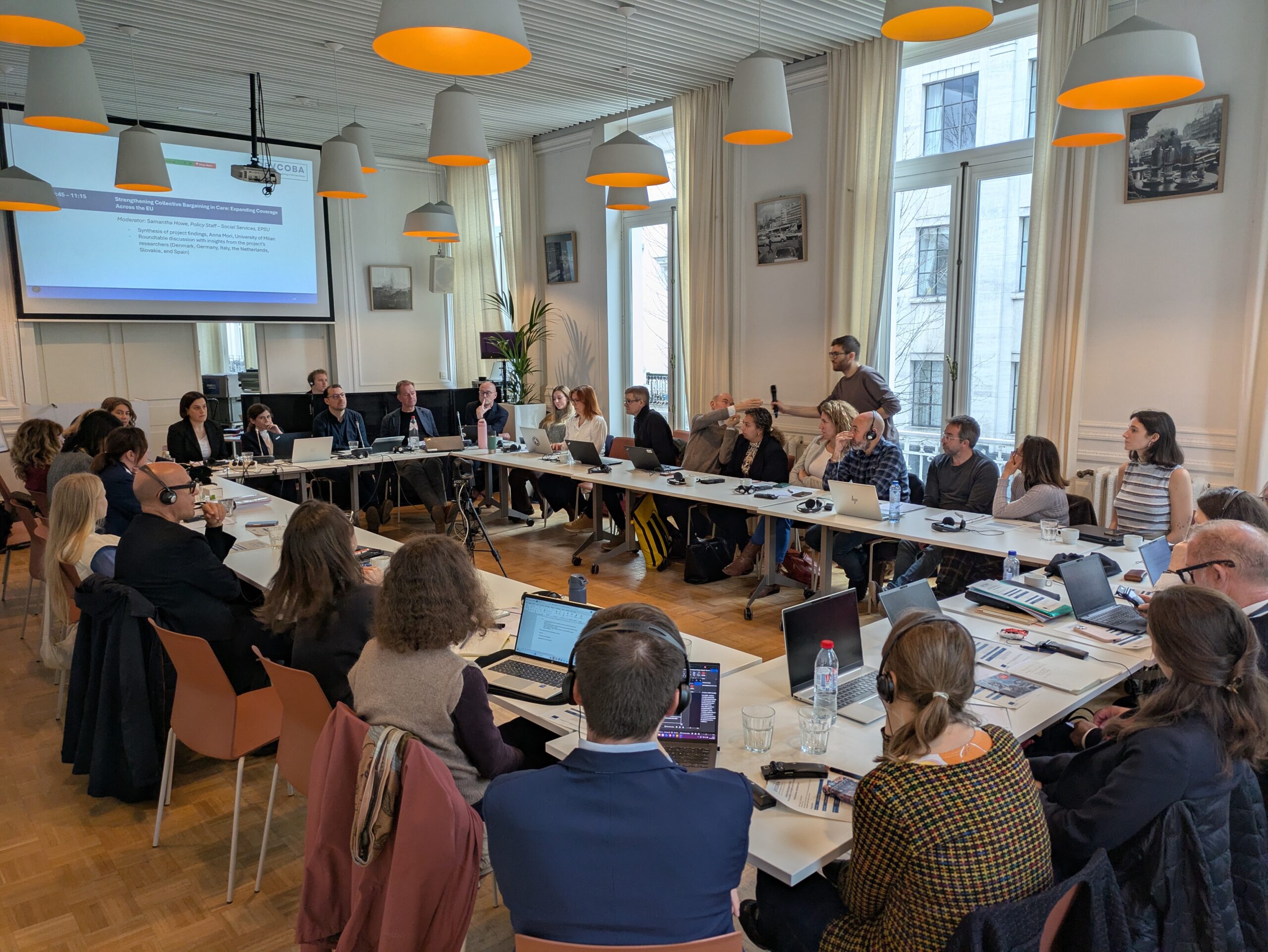
The DEVCOBA project’s final conference took place on 11 December 2025 in Brussels. It brought together over 40 participants, including researchers, social partners, and EU stakeholders to discuss collective bargaining and job quality in early childhood education and care (ECEC) and long-term care (LTC).
The discussions highlighted the strong fragmentation of care systems across countries, making collective bargaining complex and uneven.
Country examples showed shared challenges despite different national contexts. Researchers from Spain and Italy pointed to heavy reliance on families and large regional disparities, while Germany reported severe understaffing, high workloads, and increasing burnout among care workers. The Netherlands representatives highlighted more stable social dialogue in long-term care but raised concerns about unpredictable working hours.
Job quality emerged as a central concern. Care workers across countries identified workload, pay, and autonomy as the most important factors for staying in the sector. Ethical stress, caused by insufficient time and resources to provide quality care, was also reported, particularly in this highly feminised workforce.
During a panel discussion with EU-level speakers on the question “What makes quality jobs in the care sector?”, participants heard insights from Eurofound on wages in social services, an update from the European Commission on the implementation of the European Care Strategy three years after its launch, and a presentation of the newly released Quality Jobs Roadmap, outlining how it can contribute to improving job quality across Europe.
Working group discussions highlighted key barriers to effective collective bargaining, including low unionisation in some countries, fragmented employer representation, and the exclusion of domestic workers.
Participants also shared good practices from several countries and agreed that adequate public funding, proper application of agreements, and a strong gender perspective are essential to achieve real improvements.
To conclude the day, the Social Employers and EPSU jointly presented their Framework of Actions on Retention and Recruitment, which addressed many of the issues discussed during the conference.
Further information on the DEVCOBA project, as well as presentations from the final conference, are available on the project website.