Making Gender Equality Practical in Disability Care: Discover the EQUAL-CARE Inclusive Practices Toolkit
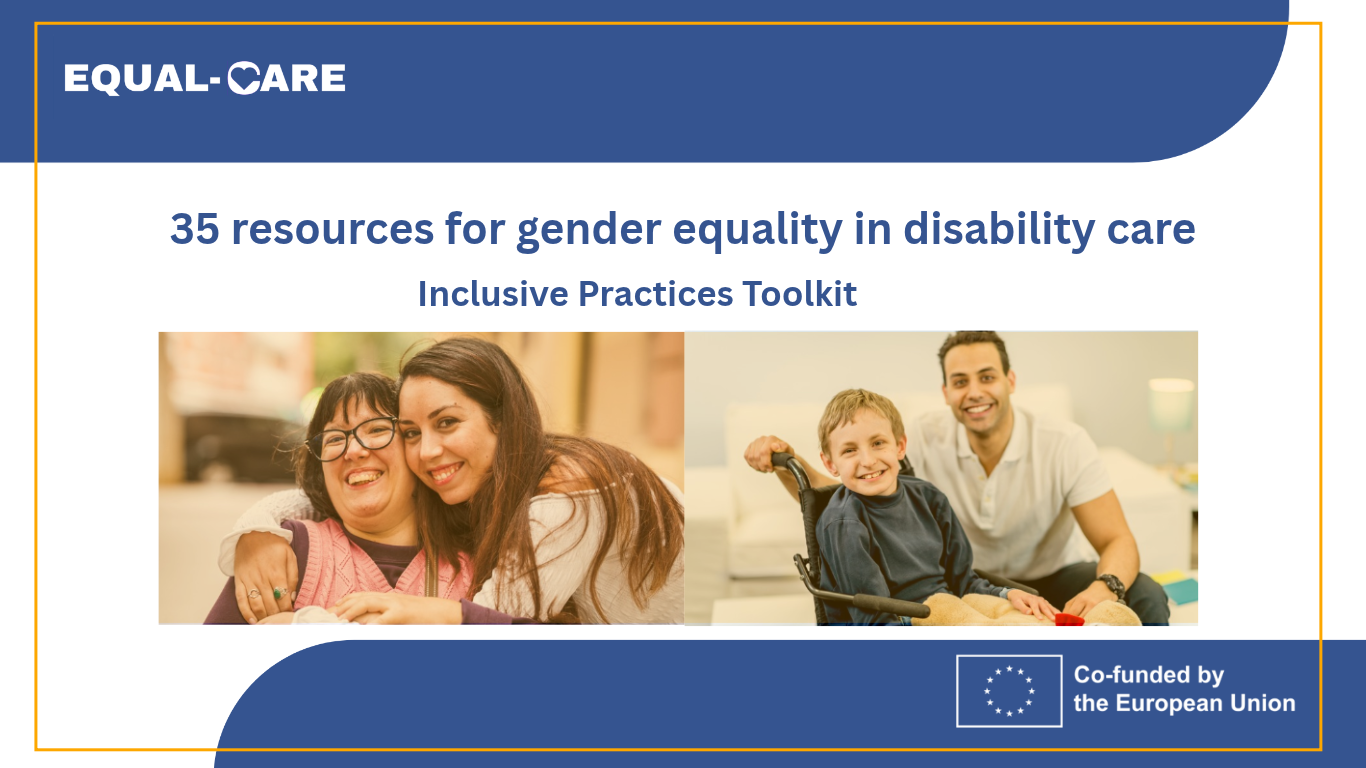
The EQUAL-CARE project has developed the Inclusive Practices Toolkit, bringing together 35 tools, initiatives, training courses and resources to promote gender equality in the disability care workforce and among informal carers.
The resources have been identified across eight European countries: Austria, Finland, Greece, Italy, Lithuania, Slovenia, Spain and Switzerland, alongside European and international initiatives.
The toolkit is more than a collection of resources. It provides practical measures and inspiring examples that organisations can learn from and adapt to their own working environments.
It covers a wide range of topics, including:
- Fair pay and pay transparency: salary calculators, pay equity tools and resources to help identify and address potential pay gaps.
- Gender equality policies: guidance and resources for developing and implementing Gender Equality Plans (GEPs).
- Work–life balance: examples of flexible working arrangements, four-day working weeks and family-friendly workplace measures.
- Inclusive recruitment and workplaces: tools to identify gender bias in job advertisements and promote more inclusive recruitment practices.
- Training and awareness raising: free online courses, educational resources and videos to strengthen knowledge of gender equality.
The toolkit is primarily designed for managers, HR professionals, employers, trainers and educators working in disability care and support organisations.
It can also be useful for care and support professionals and other stakeholders interested in making the sector more inclusive and equitable.
Importantly, no previous expertise in gender equality is required. The resources are intended to support both those taking their first steps towards promoting gender equality and those who already have experience working on these issues.
Explore the EQUAL-CARE Inclusive Practices Toolkit available in:
English, Italian, Lithuanian, Slovenian, Spanish, German, Greek and Finnish.